
Understanding Dehumidifiers
A dehumidifier is an appliance designed specifically to reduce the level of humidity in the air, thereby improving comfort and preventing moisture-related problems. The basic principle of a dehumidifier revolves around moisture extraction from the air through condensation or absorption methods. It operates by drawing in humid air, which then passes over cool coils. As the air cools, moisture condenses into water droplets, which are collected in a reservoir or drained away. This process not only aids in maintaining a comfortable indoor environment but also plays a significant role in drying clothes more efficiently.
The effectiveness of a dehumidifier in drying clothes relies heavily on the principles of humidity control. When the relative humidity in a room is lowered, the air can absorb more moisture from wet clothes, aiding in the drying process. This functionality makes dehumidifiers particularly valuable in damp environments or during colder months when outdoor drying is less feasible. Moreover, they can operate continuously, making them a reliable option for maintaining optimal humidity levels.
There are various types of dehumidifiers available on the market, including refrigerant dehumidifiers, desiccant dehumidifiers, and whole-house systems. Each type boasts distinct mechanisms suited for different humidity levels and environments. For instance, refrigerant models are generally more energy-efficient in warm climates, while desiccant varieties excel in cooler conditions. The energy efficiency of a dehumidifier significantly affects its operational costs and environmental impact, and it is crucial for consumers to consider this aspect when making a choice. Additionally, factors such as room size, airflow, and initial humidity levels can influence a dehumidifier’s performance in drying laundry effectively. Understanding these elements will help one appreciate the advantages of using a dehumidifier compared to a heated airer when evaluating which dries clothes faster.
Exploring Heated Airers
Heated airers are an efficient appliance designed specifically for the purpose of drying clothes quickly and effectively. Unlike traditional air-drying methods that rely solely on ambient temperature and airflow, heated airers incorporate built-in heating elements to generate warmth, accelerating the drying process. Typically made from lightweight materials, these devices can be easily moved around, making them a practical addition to any household.
The design of a heated airer usually consists of a frame that holds multiple tiers or racks for draping wet garments. This multi-tiered construction allows for optimal space utilisation while ensuring that clothing items receive adequate exposure to heated air. As moisture evaporates from the fabric, the heated airer circulates warm air around the clothing, effectively drawing out humidity at a faster rate than conventional drying methods.
One of the defining features of heated airers is their energy efficiency. Many models are designed to use significantly less energy compared to a tumble dryer, which can be a key consideration for households looking to minimise energy consumption. By utilising a heated airer, users can efficiently dry clothes in a shorter timeframe without incurring excessive electricity costs.
Furthermore, the speed of drying is substantially improved when using a heated airer than by simply hanging clothes indoors or outdoors. The ability to position a heated airer in a variety of indoor settings ensures that users can take advantage of warm, dry air, leading to quicker drying times regardless of the external weather conditions. In essence, heated airers offer a reliable solution for those seeking to dry clothes quickly without compromising on space or energy efficiency. This aspect becomes particularly relevant when considering the ongoing debate of dehumidifier vs heated airer: which dries clothes faster? The performance of heated airers in this context truly stands out.
Comparative Analysis: Dehumidifiers vs Heated Airers
When evaluating the efficiency of a dehumidifier versus a heated airer for drying clothes, several critical factors must be considered. Each device has its advantages and limitations, making it essential to assess them through real-world scenarios to determine which option dries clothes faster. Dehumidifiers are designed to reduce moisture levels in the air, which can facilitate faster drying, especially in damp conditions. They remove excess humidity, creating an environment where clothes can dry more efficiently. Depending on the model, a dehumidifier can remove several litres of moisture from the air within hours, promoting quicker evaporation from wet fabrics.
On the other hand, heated airers are designed to directly provide heat to clothing, which accelerates drying. This method can be particularly effective in drier climates or well-ventilated spaces as it uses convection to circulate warm air around the clothing. A heated airer can often dry clothes within a few hours, depending on fabric thickness and ambient conditions. Additionally, the setup for a heated airer is usually more straightforward, and many models are foldable or portable, making them user-friendly choices in smaller living spaces.
Cost-effectiveness is another crucial consideration. While dehumidifiers may have a higher initial cost, they tend to consume less energy over time compared to heaters, potentially making them more economical in the long run. It’s also important to factor in climate conditions; in extremely humid environments, dehumidifiers might outperform heated airers due to their moisture-removing capabilities. Conversely, in drier climates, heated airers may have the edge.
User preferences, such as the convenience of use and space availability, affect the choice between a dehumidifier and a heated airer. While both devices effectively dry clothes, their efficiencies can vary based on these contextual factors, thus impacting the overall drying time and suitability for individual needs.
Making the Right Choice for Your Needs
When deciding between a dehumidifier and a heated airer in the quest to determine which dries clothes faster, various factors must be considered. It is essential to evaluate your specific needs, as both devices cater to different drying environments and preferences.
Firstly, the budget plays a significant role in your decision-making process. Dehumidifiers generally vary in price depending on their capacity and features. If you have a larger budget, investing in a high-capacity model could be beneficial, especially for larger households or frequent laundry loads. Conversely, heated airers tend to be more cost-effective upfront; however, it is crucial to factor in electricity costs associated with extended use.
Available space is another important criterion. If you have a small living area, a heated airer might be more practical due to its compact design. Many heated airers can be easily folded away when not in use, making them ideal for apartments or homes with limited drying spaces. On the other hand, dehumidifiers require sufficient room to operate efficiently, as they may need a designated spot for optimal airflow.
The frequency of laundry can influence your choice, too. For households that do laundry multiple times a week, a dehumidifier could provide a faster drying solution, as it effectively reduces moisture levels in the air, allowing clothes to dry more quickly. However, if laundry is infrequent, a heated airer may suffice, offering a simpler and more portable option.
Lastly, consider your drying preferences. Some individuals prefer the gentle warmth provided by a heated airer, which can be kinder to delicate fabrics. In contrast, a dehumidifier excels in scenarios where dampness is persistent, helping to maintain a more comfortable indoor environment while drying clothes. By reflecting on these factors, you can make an informed decision about which device best fits your lifestyle.

- WINNER OF THE WHICH? BEST BUY AWARD (2025): Reviewed as a “Best Buy” and “Energy Efficient” by Which magazine, the Pro B…
- SMART APP & DIGITAL CONTROL PANEL: Monitor current humidity level, set a target humidity level or select from 3 operatin…
- AUTOMATIC WIFI SCHEDULING: The free smartphone app allows you to save energy and optimise performance by creating a cust…
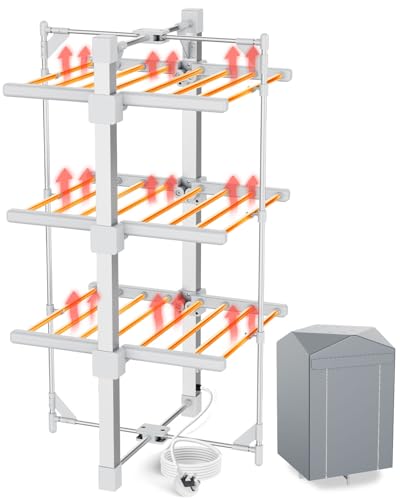
- POWERFUL 3-TIER FOR QUICK DRYING: Our electric clothes dryer boasts a 3-tier construction with a generous drying space (…
- HIGH CAPACITY FOR ANY HOME: With a capacity to accommodate up to 15kg of wet laundry, its open-sided shelves allow full …
- ECO-CONSCIOUS & ENERGY-EFFICIENT: It’s a cost-effective way to dry your laundry indoors, offering lower running costs co…